Over the past decade, blockchain has evolved from an experimental technology associated primarily with cryptocurrencies into a serious piece of enterprise infrastructure. What began with peer-to-peer digital payments has matured into a broader ecosystem of tokenised assets, smart contracts, decentralised finance, digital identity, and institutional-grade settlement networks. Today, some of the world’s largest banks, asset managers, custodians, and market infrastructure providers are actively investing in blockchain as part of their long-term digital strategy.
The conversation has moved well beyond Bitcoin.
Financial institutions are now exploring real-world asset tokenisation, on-chain fund distribution, digital collateral management, programmable settlement, and blockchain-based operating models that promise greater transparency, reduced operational friction, and faster access to liquidity. Technologies that once sat firmly in innovation labs are increasingly moving into live production environments.
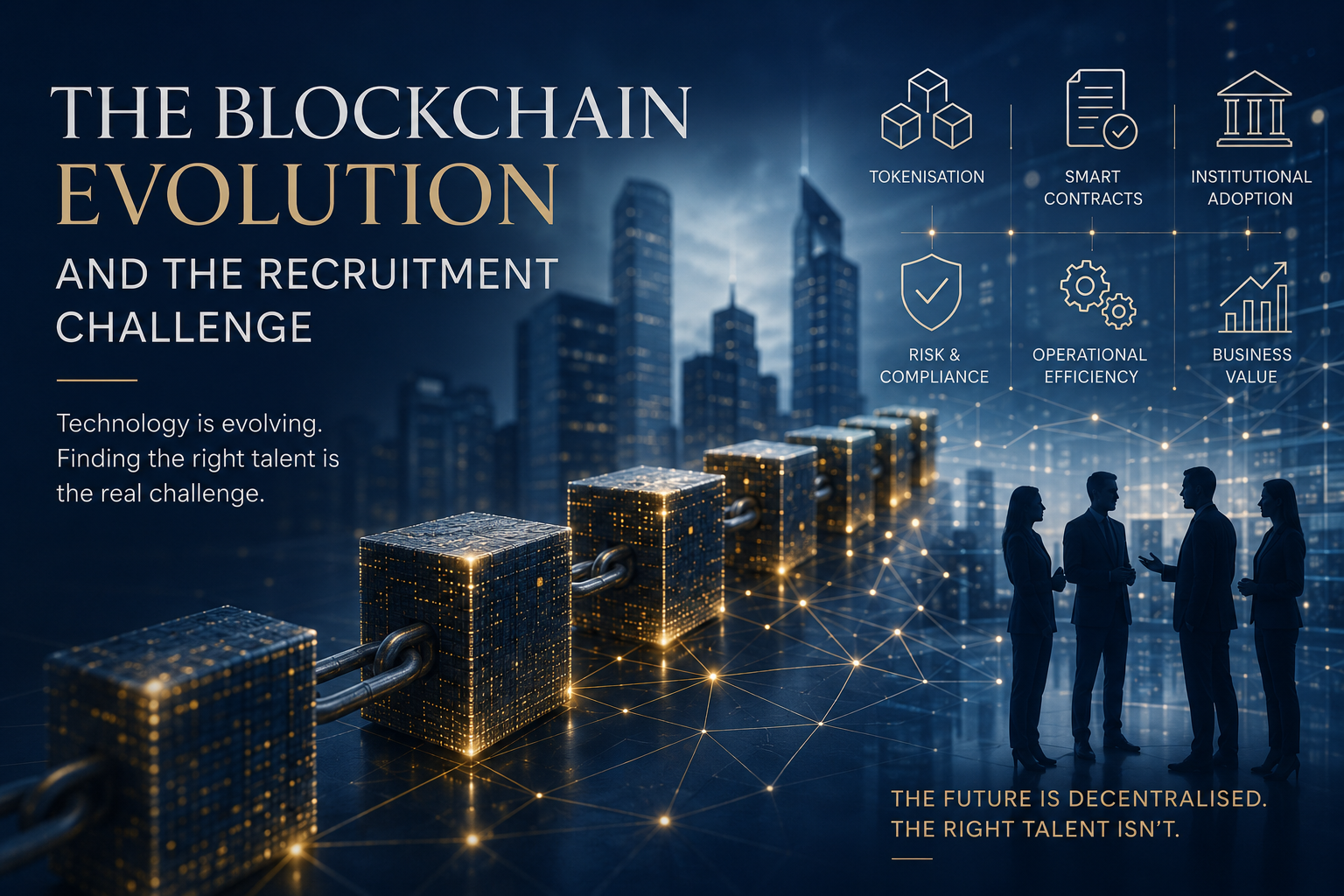
But while investment in blockchain infrastructure continues to accelerate, one challenge consistently stands in the way of execution—talent.
The Skills Gap
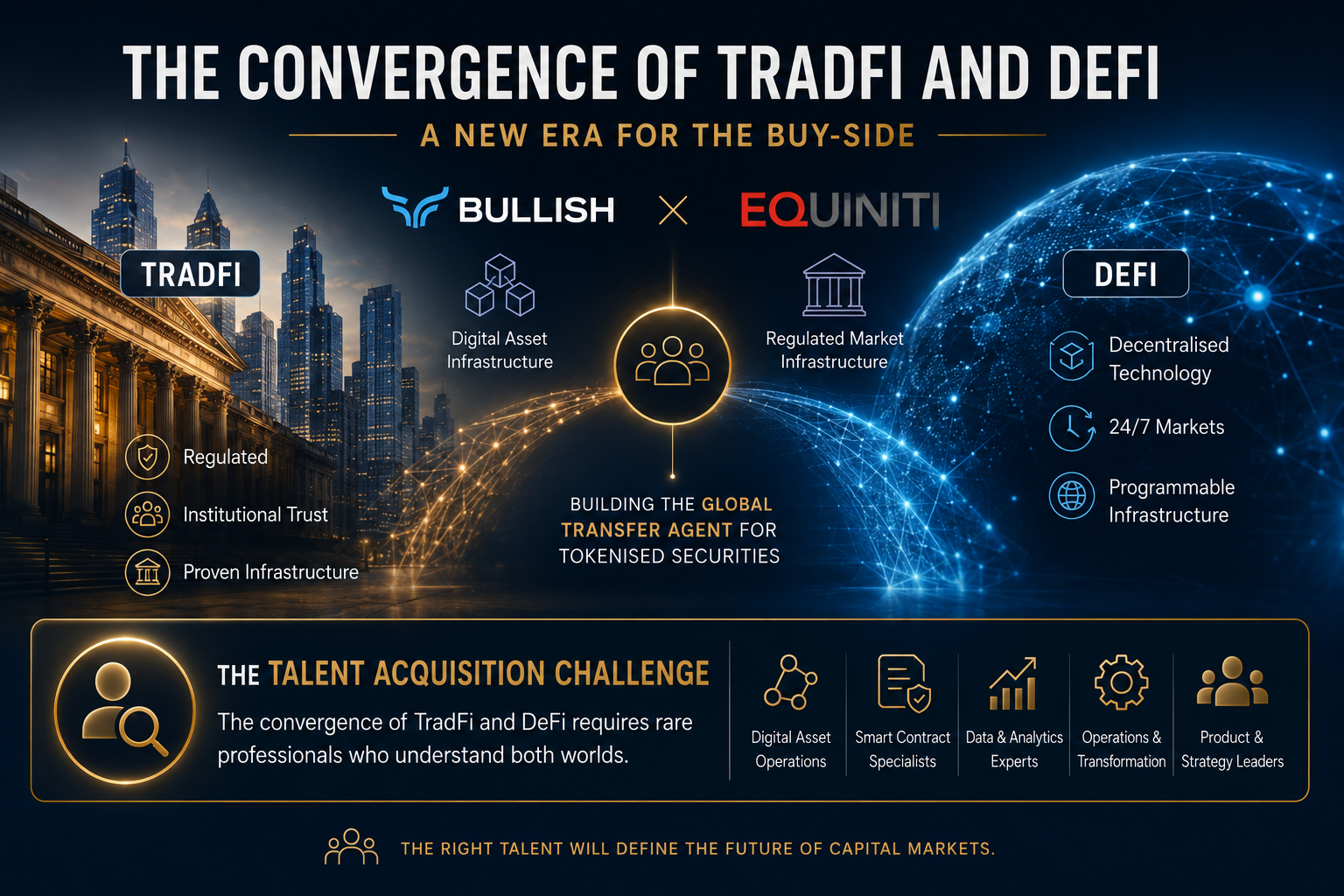
Blockchain transformation is not simply a technology project. It requires professionals who can bridge multiple disciplines—investment operations, financial markets, regulatory frameworks, software engineering, digital security, and emerging distributed ledger technologies.
That talent pool remains incredibly limited.
Firms are no longer just looking for blockchain developers. They need product managers who understand tokenised securities, operations specialists who can support digital asset workflows, compliance professionals who understand on-chain risk, and business leaders who can translate technical innovation into commercial outcomes.
In short, organisations need people who can speak both finance and technology.
Successful hiring in this space demands a deep understanding of both sides of the equation—traditional financial markets and next-generation digital infrastructure.
The Competition for Talent Is Intensifying
The same candidates are being pursued by:
- Global asset managers
- Investment banks
- Custodians and transfer agents
- Fintechs and digital-native platforms
- Crypto exchanges and infrastructure providers
- RegTech and AI-driven financial technology businesses
The best candidates are rarely active job seekers. They are already embedded in transformation programmes, innovation teams, or fast-growing digital businesses.
What the Market Needs Now
As blockchain adoption moves from proof of concept to production, demand is growing for professionals across:
- Digital asset operations
- Blockchain settlement and custody
- Smart contract operations
- Tokenisation product management
- AI and workflow automation
- MLOps and data governance
- Digital accounting, audit, and risk oversight
These are not future roles. They are being hired today.
The Recruitment Challenge — And Opportunity
The organisations that succeed in blockchain will not necessarily be the ones with the biggest technology budgets. They will be the ones that secure the right people early—individuals who can combine operational credibility, regulatory awareness, and digital expertise.
At Mayford James, we believe blockchain recruitment requires more than keyword searches and generic talent databases. It requires genuine sector expertise, trusted industry relationships, and a clear understanding of how digital infrastructure is reshaping investment operations.
.jpg)
.jpg)
.jpg)
.jpg)